
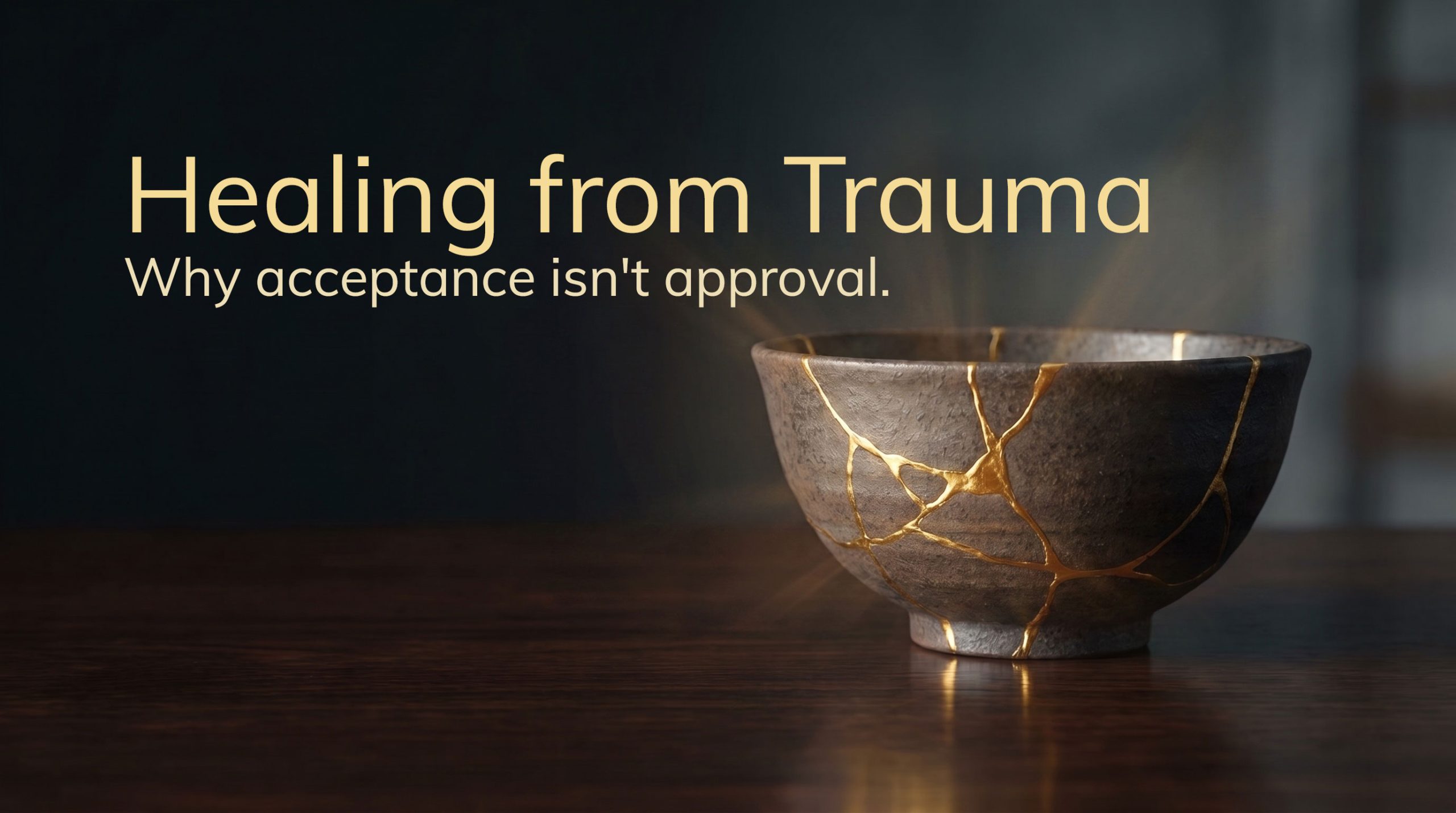
Healing from trauma: why acceptance isn’t approval
Healing from trauma: why acceptance isn't approval
Something happened to you. Maybe it was years ago, maybe more recently. And even though the event is over, it doesn't always feel over. A sound, a smell, an anniversary, or nothing at all can pull you right back into it.
If that sounds familiar, you're not broken and you're not weak. You're carrying something heavy. And healing from trauma is possible with the right support.
What trauma actually is
Trauma isn't defined by the event itself. It's defined by what the experience did to you. Two people can go through the same thing and come out affected in very different ways. There's no threshold your experience has to meet to "count."
When something overwhelms your ability to cope, your mind and body can stay stuck in protection mode long after the danger has passed. That can show up as:
- Anxiety or feeling constantly on edge
- Trouble sleeping
- Feeling numb or disconnected
- Avoiding certain places, people, or conversations
- Strong reactions to things that seem small on the surface
None of that means something is wrong with you. It means your nervous system did its job during a terrible moment and hasn't gotten the message that the moment is over.
Why acknowledgement comes first
Many people spend years minimizing what happened to them. You might tell yourself it wasn't that bad, that others have it worse, or that you should be over it by now.
Minimizing feels like strength, but it usually keeps the wound open. You can't process something you won't let yourself name. Acknowledgement simply means being honest with yourself: something happened, and it affected me. That's it. It's not dwelling, and it's not weakness. It's the starting line.
Acceptance is not approval
This is where a lot of people get stuck, so let's be clear about what acceptance means in trauma recovery.
Accepting what happened does not mean saying it was okay. It doesn't mean forgiving anyone, forgetting anything, or deciding it didn't matter. It means accepting one specific fact: this is part of my story, and no amount of wishing will make it not have happened.
That distinction matters because fighting reality takes enormous energy. When you stop spending that energy on "it shouldn't have happened," you can start spending it on "what do I need now?" The past is part of your story. It isn't the whole of it.
A small practice you can start with
Recovery happens in therapy, but there are small things you can do between now and your first appointment. When a memory or feeling surges, try this:
- Name it. Silently say to yourself, "I'm having a trauma response right now." Naming what's happening creates a little distance between you and the feeling.
- Ground yourself in the present. Look around and name five things you can see, four you can hear, and three you can touch. This reminds your nervous system where and when you actually are.
- Respond with kindness, not criticism. Instead of "why am I still like this," try "this makes sense, given what I went through." Self-blame slows healing. Compassion supports it.
This won't erase what happened, and it isn't a substitute for treatment. It's a way to steady yourself in hard moments.
What healing from trauma really looks like
Recovery from trauma isn't a straight line, and it isn't about erasing memories. It's about the past losing its grip on your present. Over time, with support, the memories become something you have rather than something that has you.
A trauma-informed therapist won't push you to relive anything before you're ready. Therapy moves at your pace. You set the speed, and you stay in control. Counselors don't tell you what to do. They listen, help you make sense of what you're carrying, and give you tools to manage it.
When to reach out for help
Consider talking to a professional if any of these are true:
- Memories, nightmares, or flashbacks keep intruding on your daily life
- You're avoiding people, places, or situations to keep feelings at bay
- You feel numb, disconnected, or constantly on guard
- You're using alcohol, food, or other habits to cope with the feelings
- It's been months or years and things aren't getting easier
You don't need to be in crisis to deserve support. Reaching out isn't an admission that you failed to handle it alone. It's a decision to stop carrying it alone.
If trauma has been affecting your daily life, talking to a professional can help. NCC offers therapy online across New York State. Medicaid, Medicare and most insurance accepted.
Call (718) 232 1351 to schedule an appointment.